


Japanese automakers are traditionally known for high reliability and long-lasting vehicles, but even in 2026 some brands are experiencing noticeable reliability concerns according to recent owner surveys and predicted reliability data. While top brands like Toyota, Subaru, and Lexus still perform strongly in overall quality rankings, a few Japanese manufacturers are struggling in key areas that could influence long-term ownership satisfaction.
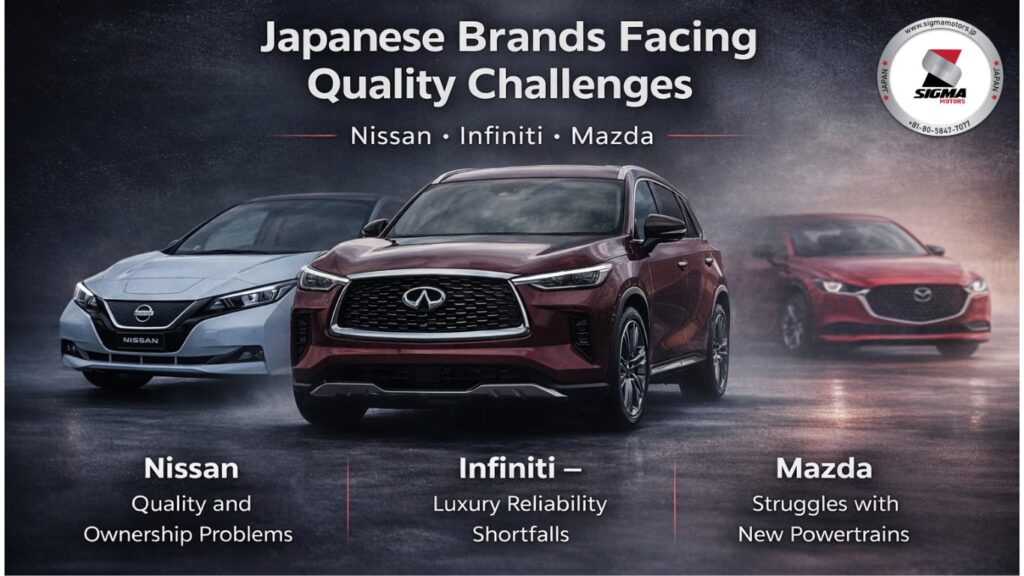
Nissan – Quality and Ownership Problems
Despite its historical reputation, Nissan has been highlighted as one of the Japanese brands with reliability challenges. Consumer reliability reports rank Nissan below many of its domestic rivals, and owner satisfaction surveys placed it near the bottom among mainstream Japanese marques. Issues reported by owners include transmission concerns, electrical glitches, and inconsistent build quality across certain models — making it less dependable compared to competitors like Toyota and Honda.
Nissan also faced broader financial struggles in recent periods, including net losses and restructuring efforts that may have impacted quality control and product consistency.
Infiniti – Luxury Reliability Shortfalls
Infiniti, the luxury division of Nissan, shares many platforms and components with its parent brand, meaning its reliability performance often reflects Nissan’s broader challenges. Owners have reported frequent electrical malfunctions, infotainment issues, and transmission complaints — concerns that can diminish the overall premium experience expected in luxury vehicles. These repeated problems have placed Infiniti behind other Japanese luxury rivals in owner reliability surveys.
Mazda – Struggles with New Powertrains
Although Mazda traditionally posts solid reliability scores, recent data shows some of its newer larger SUVs — especially the CX-70 and CX-90 models — suffering from technical issues with redesigned powertrains and plug-in hybrid components. Consumer reports indicate that these models contributed to a drop in overall predicted reliability for Mazda, even though smaller cars like the Mazda3 still perform well.
This highlights a broader industry challenge where new technologies — especially hybrid and electrified systems — can introduce complexity and early reliability variability.
What This Means for Buyers
While Japan still leads the world in vehicle reliability with many strong performers, brand and model-specific variations are increasingly important. Here are a few takeaways for buyers in 2026:
Toyota, Subaru, and Lexus remain among the most reliable choices overall, often topping dependability and owner satisfaction surveys.
Model-level evaluations matter — even within a generally reliable brand, certain new technologies (like PHEV systems) can affect real-world dependability.
Considering long-term ownership costs, maintenance, and available support networks can make a significant difference in total vehicle satisfaction.
Sigma Motors keeps you updated with the latest automotive trends, reliability insights, and expert guidance to help you make confident car-buying decisions. Whether you’re importing from Japan or choosing your next vehicle, we bring you trustworthy information you can rely on.