


The global automotive industry is experiencing an unusual wave of leadership changes. In the past year, several major manufacturers—including Porsche, Nissan, Stellantis, Volvo Cars, and Renault—have reshuffled their top leadership positions. More companies such as Toyota and BMW are also expected to see leadership transitions.
This growing trend reflects the intense transformation currently happening across the automotive sector. Automakers are facing technological disruption, increasing competition, and changing consumer demands, which are forcing companies to rethink their leadership strategies.
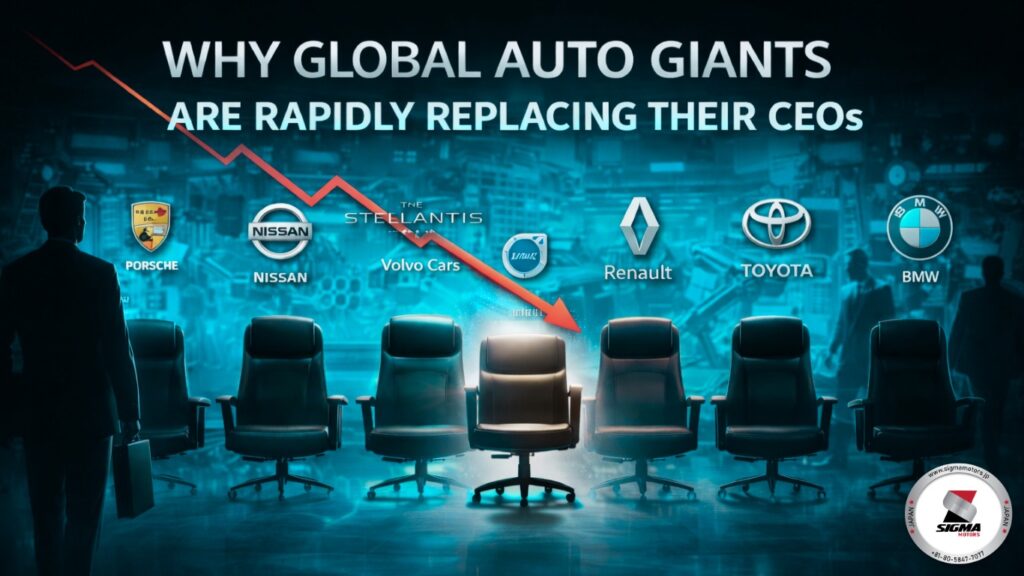
A Wave of Leadership Changes Across the Industry
Automotive CEOs traditionally held their roles for long periods, guiding companies through slow and steady growth. However, that pattern is changing rapidly. Boards are now replacing leaders more frequently as they search for executives capable of navigating the industry’s biggest technological shift in decades.
Many automakers are now appointing younger and more adaptable executives who can respond quickly to the evolving market.
The Transition to Electric Vehicles
One of the biggest factors behind these leadership changes is the global shift toward electric vehicles. Automakers must now invest billions into:
- Battery technology
- Electric vehicle platforms
- Charging infrastructure
- Software-driven vehicle systems
Electric cars also require fewer mechanical parts than traditional combustion vehicles, which forces manufacturers to restructure production processes and supply chains.
Companies need leaders who understand both automotive engineering and modern technology ecosystems.
Rising Competition From Chinese Automakers
Another major challenge comes from rapidly expanding Chinese car manufacturers such as BYD, Geely, and Xiaomi.
These companies are producing affordable electric vehicles packed with advanced technology, creating intense competition for established brands worldwide.
As a result, traditional automakers are seeking new leadership capable of competing in this fast-changing environment.
Software and AI Are Changing the Industry
Modern vehicles are no longer just mechanical machines. Today’s cars rely heavily on:
- Software updates
- Artificial intelligence systems
- Advanced driver assistance technologies
- Digital connectivity
Because of this shift, automotive companies increasingly require CEOs with technology-focused strategies and digital expertise rather than purely traditional engineering backgrounds.
Financial Pressure and Strategic Restructuring
The transition toward electrification and new technologies requires enormous investment. At the same time, many automakers are experiencing slowing demand in certain markets and rising production costs.
This financial pressure is prompting boards to bring in new leadership teams capable of:
- Cutting costs
- Accelerating innovation
- Restructuring operations
Strengthening global competitiveness.
Shorter CEO Tenures Becoming the New Normal
Industry experts believe the era of long-serving automotive CEOs may be ending. With rapid technological change and fierce global competition, companies now expect leaders to deliver results quickly.
As a result, CEO tenures in the automotive sector are becoming shorter and more performance-driven, with companies ready to change leadership whenever strategic direction needs adjustment.
The Auto Industry’s Biggest Transformation in Decades
The current wave of CEO replacements highlights how dramatically the automotive world is evolving. Electrification, digital technology, and global competition are forcing companies to reinvent themselves faster than ever before.
For automakers, finding the right leadership is now critical to surviving and thriving in the next generation of mobility.
Sigma Motors Japan keeps customers informed about major global automotive developments and industry trends.
If you’re looking to import reliable Japanese vehicles directly from Japan, Sigma Motors Japan provides access to top auction houses and trusted vehicle sourcing services.