


The automotive world is already buzzing with excitement about the possible next-generation Corvette, widely referred to as the C9 Corvette. Although the model has not been officially revealed yet, recent concept renderings and futuristic interpretations have sparked massive discussion among car enthusiasts worldwide.
If the final production model looks even close to these stunning concepts, the future Corvette could become one of the most visually impressive sports cars ever created.
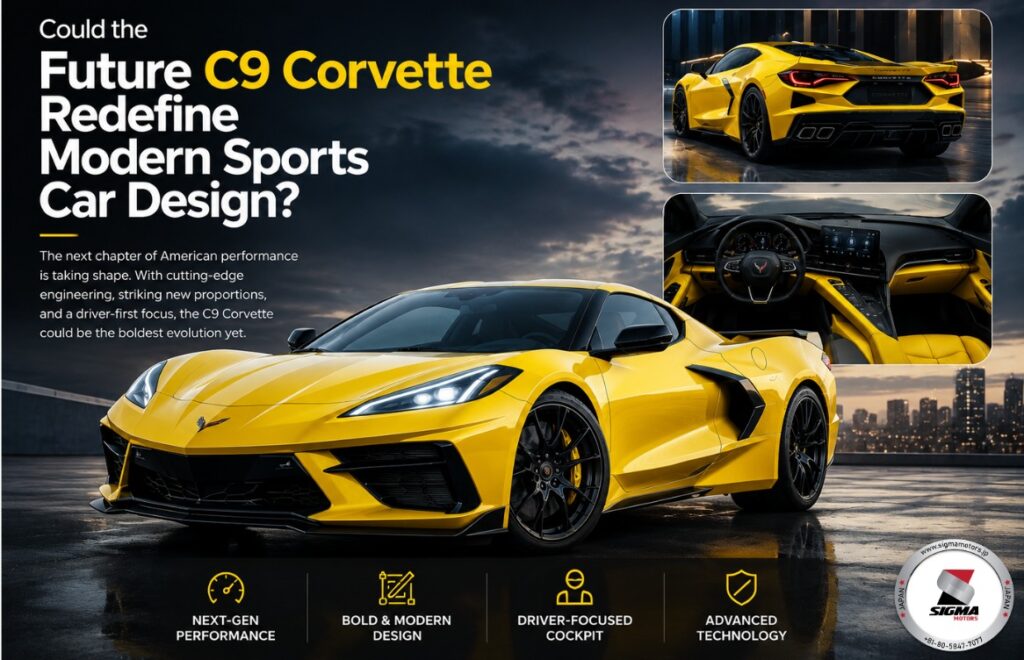
A Bold Vision for the Next Generation
The latest unofficial concept designs imagine the C9 Corvette with:
- Aggressive aerodynamic styling
- Ultra-low supercar stance
- Sharp futuristic body lines
- Advanced lighting signatures
- Mid-engine inspired proportions
The design language appears heavily influenced by modern hypercars while still maintaining the Corvette’s iconic sporty identity.
Many enthusiasts believe this futuristic approach could push the Corvette into an entirely new category of performance vehicles.
The Evolution of Performance Cars
Modern sports cars are no longer judged only by engine power. Today’s buyers also expect:
- Advanced aerodynamics
- Electrification technology
- Driver-focused interiors
- Smart digital features
- Lightweight performance engineering
This is why concept renderings of the future C9 focus not just on speed—but also on futuristic design and technology integration.
Global Shift Toward Electrified Performance
The sports car industry is rapidly evolving toward:
- Hybrid systems
- Electric performance technology
- Sustainable engineering
- Smarter aerodynamics
As automotive regulations tighten globally, future high-performance vehicles are expected to combine:
- Power
- Efficiency
- Advanced safety systems
This shift is already influencing design trends across the global automotive industry.
Japanese Cars Continue Leading in Smart Performance
While futuristic sports car concepts generate excitement, Japanese automotive engineering continues to dominate in areas that matter most for everyday buyers:
- Reliability
- Efficient performance
- Hybrid innovation
- Long-term durability
- Practical ownership value
Japanese manufacturers have successfully balanced sporty design with real-world usability for decades.
This is why Japanese sports-inspired vehicles and hybrids continue gaining popularity worldwide.
Why Pakistani Buyers Prefer Japanese Automotive Engineering
In Pakistan, practicality remains just as important as styling and performance. Buyers increasingly look for:
- Better fuel economy
- Strong resale value
- Reliable engineering
- Lower maintenance costs
Japanese vehicles consistently deliver this balance better than most markets, especially as fuel prices and ownership costs continue rising.
Even enthusiasts who admire exotic sports car concepts often choose Japanese vehicles for daily reliability and smarter long-term ownership.
Sigma Motors Insight
At Sigma Motors Japan, we closely follow future automotive trends and global performance car evolution. The excitement surrounding futuristic sports car concepts shows how rapidly vehicle design is evolving.
However, when it comes to real-world value, Japanese cars continue leading because they combine:
- Modern technology
- Efficiency
- Reliability
- Long-term practicality
As the automotive world moves toward electrified and futuristic designs, Japanese engineering remains one of the strongest and smartest choices for buyers worldwide.
Final Verdict
The future C9 Corvette concepts prove that the next era of sports cars could become more aggressive, futuristic, and technologically advanced than ever before.
But while futuristic styling captures attention, long-term ownership value still matters most for everyday consumers—and this is where Japanese automotive philosophy continues to stand out globally.
The future of cars may look exciting, but efficiency, durability, and reliability will always remain timeless.