


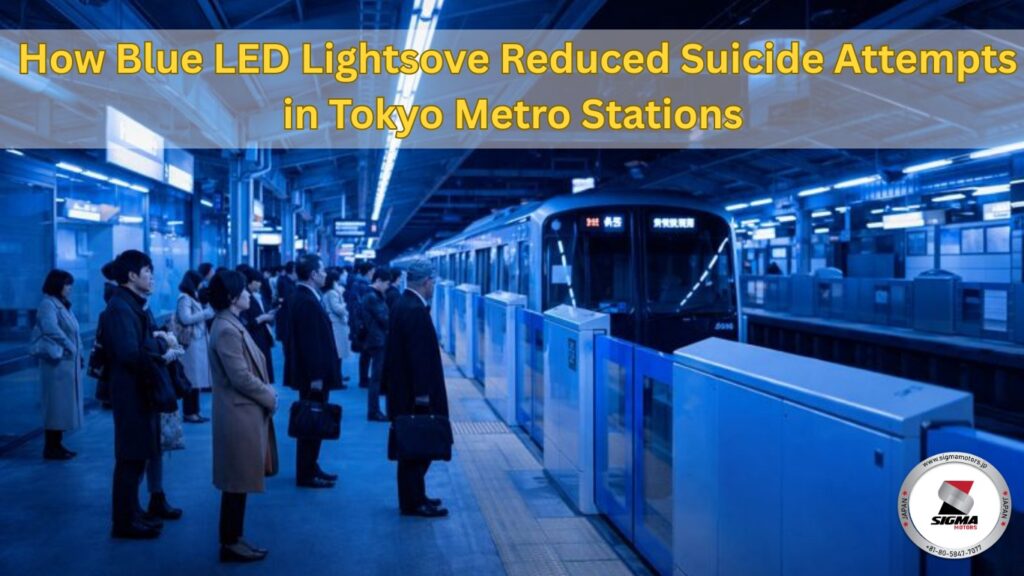
Tokyo’s metro system has seen a remarkable reduction in suicide attempts following the installation of blue LED lights on station platforms and entrances. According to reported data, incidents dropped by approximately 84%, making the initiative one of Japan’s most notable low-cost mental health interventions in public infrastructure.
The Science Behind Blue Light
Psychologists suggest that blue light has a calming psychological effect. It is believed to reduce emotional agitation, slow impulsive decision-making, and ease mental distress during moments of crisis. In high-stress environments such as busy metro stations, these subtle effects can play a crucial role in influencing behavior.
A Cost-Effective Alternative to Traditional Measures
Japan has long faced challenges related to suicide prevention, particularly in dense urban transit systems. Conventional methods—such as physical barriers, surveillance systems, and staff monitoring—are often expensive, intrusive, and difficult to scale.
The blue LED lighting approach offered a different solution. Rather than restricting movement, it relied on environmental psychology, altering the atmosphere to encourage calmness and reflection without physical intervention.
Measurable Impact and Global Interest
The success of the initiative surprised many experts, as it demonstrated that small design changes can lead to significant social impact. Following Tokyo’s results, similar lighting-based interventions are now being researched and tested in other countries as part of broader suicide prevention strategies.
Design, Technology, and Social Responsibility
Mental health specialists emphasize that while lighting alone is not a complete solution, its effectiveness shows how urban design, technology, and psychology can work together to save lives—especially when combined with accessible mental health support systems.
Looking Ahead
Tokyo’s blue LED initiative highlights the power of thoughtful design in public spaces. It serves as a reminder that innovation is not limited to vehicles or infrastructure alone—but can also shape safer, more humane cities.
At Sigma Motors Japan, we believe responsible innovation—whether in mobility, urban planning, or technology, plays a vital role in shaping a better future.