


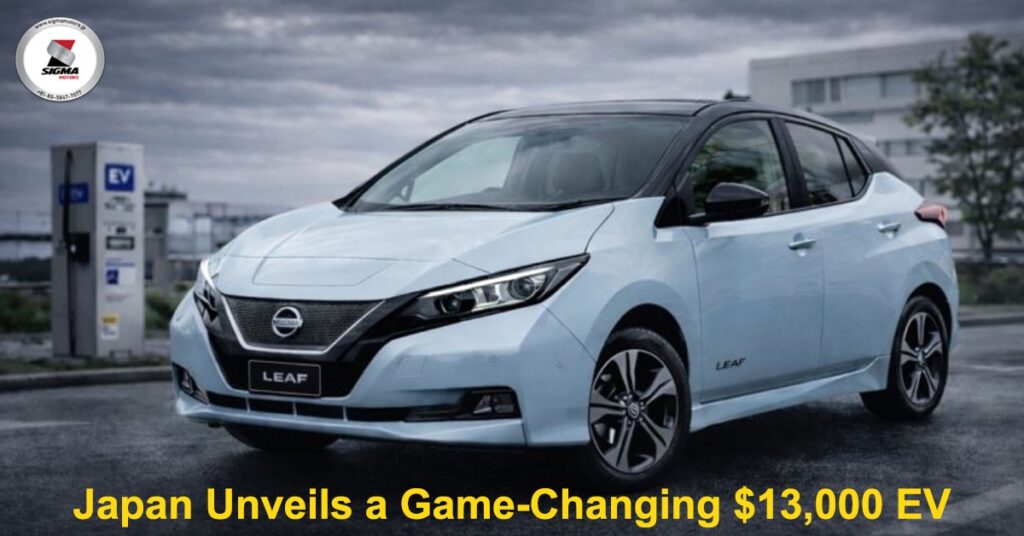
Japan has once again made headlines in the global automotive world with the rise of super-affordable electric vehicles (EVs) that are redefining expectations for city mobility. Among these, a compact Nissan “Kei car” EV — often cited as costing around $13,000 — has emerged as a surprising leader in Japan’s EV segment, showing that electric cars can be both accessible and practical for everyday use.
A New Era of Accessible EVs
In Japan, “kei cars” — ultra-compact vehicles designed under country-specific regulations — have long been popular due to their small size, low taxes, and efficiency. Recently, automakers have pushed this concept further by introducing electric versions of these tiny cars, with price points that challenge traditional EV pricing worldwide.
One standout model, developed by Nissan and Mitsubishi, has become Japan’s best-selling electric vehicle, despite its diminutive size and simple design. Priced at roughly $13,000, this cheerful and compact EV delivers enough range for everyday city use, solid efficiency, and the ease of electric driving — all in a package tailored for tight urban environments.
Compact Yet Capable
While larger EVs often come with high costs and infrastructure demands, these tiny EVs reflect a different approach. Designed for short-distance commuting, narrow streets, and everyday errands, they pack efficient electric powertrains, easy maneuverability, and low running costs — making them especially suited for city life.
Their appeal goes beyond just affordability. With zero tailpipe emissions, quiet operation, and low maintenance, these mini EVs signal a shift toward practical, eco-friendly transportation that doesn’t require heavy subsidies or premium pricing.
What It Means for Global Markets
The rise of ultra-affordable EVs in Japan showcases how automakers can rethink electric mobility without compromising practicality. This trend could have broader implications for other markets — including South Asia, Africa, and the Middle East — where compact EVs with lower price tags may unlock new opportunities for electrification.
For countries facing rising fuel costs and urban congestion, these tiny EVs offer a glimpse into a future where electric mobility becomes truly accessible to more drivers. As battery technology advances and production scales, similarly priced EVs could soon make a real impact in markets around the world.
Sigma Motors closely watches global automotive innovations to bring you the latest in car trends, electrification, and market breakthroughs. Stay tuned for more updates and insights into the future of mobility.